LIVE COURSES
Friday, Saturday
June 24, 25, 2027
8:00 am - 4.00 p.m.
Check-in: 7:45 - 8.00 a.m.
JW Marriott Tucson Starr Pass Resort
3800 W. Starr Pass Boulevard
Tucson, AZ 85745
USA
Phone: 520.792.3500
Speaker
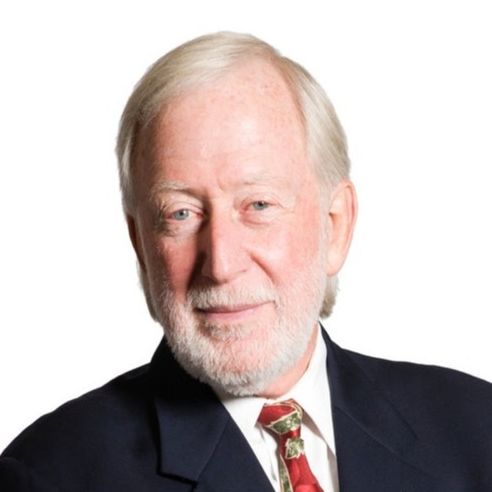
Stanley F Malamed, DDS
Emeritus Professor of Anesthesia and Medicine
University of Southern California, School of Dentistry
Los Angeles, California
Dr. Malamed is a graduate of the New York University College of Dentistry. He is a Dentist Anesthesiologist, Emeritus Professor of Dentistry, Ostrow School of Dentistry of USC. He completed a dental internship and anesthesiology residency at Montefiore Hospital and Medical Center in the Bronx, New York.
Dr. Malamed has authored more than 150 scientific papers and 16 chapters in various medical and dental journals and textbooks in the areas of physical evaluation, emergency medicine, local anesthesia, sedation and general anesthesia. Additionally, Dr. Malamed is the author of three widely used textbooks, published by C.V. Mosby Inc.: Handbook of Medical Emergencies in the Dental Office (8th edition 2022); Handbook of Local Anesthesia (7th edition 2020); and Sedation -A Guide to Patient Management (7th edition 2023).
TUITION
Emergency Medicine in Dentistry
Dentist $295
Hygienist $165
Auxiliary $165
International Dental Seminars® Inc. designates this activity for 8 continuing education credits.
Course Coordinator:
Marci Sandell
Renaissance of Local Anesthesia
Dentist $295
Hygienist $165
Auxiliary $165
International Dental Seminars® Inc. designates this activity for 8 continuing education credits.
Course Coordinator:
Marci Sandell
Emergency Medicine in Dentistry & Renaissance of Local Anesthesia
Dentist $495
Hygienist $275
Auxiliary $275
International Dental Seminars® Inc. designates this activity for 16 continuing education credits.
Course Coordinator:
Marci Sandell
Emergency Medicine in Dentistry
presented by Stanley F Malamed, DDS
Life-threatening emergencies can occur anytime, anywhere and to anyone. Such situations are somewhat more likely to occur within the confines of the dental office due to the increased level of stress which is so often present. In this course Dr. Malamed will discuss the areas which are considered vital to a proper understanding of emergency medicine: prevention, preparation, and recognition and management. This will include a discussion of preparation involving the office and staff and includes a thorough review of the office emergency kit (drugs and equipment). Additionally, it will include the recognition and management of specific emergency situations and includes the management of unconsciousness, respiratory distress, seizures, drug-related emergencies, and chest pain. This course is designed for all members of the dental office staff, not just the doctor and chairside personnel. Situations discussed here can happen outside of the dental environment as well as in the office. EVERYONE SHOULD BE PREPARED! It is strongly recommended that ALL members of the dental office staff attend this program.
Outline
- Introduction
- Prevention of medical emergencies
- Preparation for medical emergencies:
- Office staff
- Emergency drugs and equipment
- General principles- Drug related emergencies:
- Allergy
- Chest pain
- Respiratory distress
- Seizures
- Altered consciousness
- Unconsciousness
- Summary/Questions & Answers
Learning Objectives
Upon completion of this course the enrollee should be able to:
- Describe the basic management protocol for medical emergencies
- List and describe the indications for the 7 basic emergency drugs
- Describe the clinical signs and symptoms of altered consciousness
- Describe the management of altered consciousness
- Describe the clinical signs and symptoms of respiratory distress
- Describe the management of respiratory distress
- Describe the clinical signs and symptoms of allergic reactions
- Describe the management of allergic reactions
- Describe the clinical signs and symptoms of 'chest pain'
- Describe the management of chest 'pain'
EDUCATIONAL METHOD
FINANCIAL DISCLOSURE STATEMENT
Dr. Malamed is a consultant to HealthFirst Corporation.
Connie Johnston has no relevant financial relationships to disclose.
Marci Sandell has no relevant financial relationships to disclose.
All relevant financial relationships have been mitigated.
Questions? Contact Us
Renaissance in Local Anesthesia
presented by Stanley F Malamed, DDS
Local anesthesia forms the backbone of pain control techniques in contemporary dental practice. The subject of pain control in dentistry has undergone a renewal in interest, a renaissance. In this program Doctor Malamed will present an in-depth discussion of the many aspects of this important area of daily dental practice. A major area of interest has been in the introduction of new local anesthetics, such as articaine, as well as the recently released local anesthetic nasal mist for anesthesia of maxillary non-molar teeth; the local anesthesia reversal drug – phentolamine mesylate – and buffered local anesthetics, producing a more rapid onset, more comfortable injection, and more profound anesthesia. These and other areas of current research into improving pain control will be discussed.
Local anesthetics are the safest & most effective drugs in medicine for the prevention & management of pain – when used correctly. Dr. Malamed will also discuss – in depth – “Is the Mandibular Block passe?” reviewing alternative techniques such as the Gow-Gates mandibular nerve block, intraosseous anesthesia, and the use of articaine by mandibular infiltration in adult patients.
Outline
- Introduction
- Drugs: Clinical differences
- Drugs: Current research with LA’s
- Techniques: Troubleshooting the “Mandibular Block”
- Summary / Questions & Answers
Learning Objectives
Upon completion of this course the enrollee should be able to:
- List the available local anesthetic formulations and their clinical properties
- Discuss the efficacy of the intranasal local anesthetic mist
- Discuss the efficacy and mechanism of action of buffered local anesthetics
- Discuss the efficacy & mechanism of action of the local anesthesia reversal agent- phentolamine mesylate
- List & describe 5 mandibular anesthesia techniques
- Discuss the efficacy of articaine HC1 when administered by mandibular infiltration in adult patients
EDUCATIONAL METHOD
FINANCIAL DISCLOSURE STATEMENT
Dr. Malamed is a consultant to Septodont, Inc., and Onpharma Company.
Connie Johnston has no relevant financial relationships to disclose.
Marci Sandell has no relevant financial relationships to disclose.
All relevant financial relationships have been mitigated.
Questions? Contact Us

International Dental Seminars® Inc. is an ADA CERP Recognized Provider.
ADA CERP is a service of the American Dental Association to assist dental professionals in identifying quality providers of continuing dental education. ADA CERP does not approve or endorse individual courses or instructors, nor does it imply acceptance of credit hours by boards of dentistry.
Concerns or complaints about a CE provider may be directed to the provider or to the Commission for Continuing Education Provider Recognition at CCEPR.ADA.org